We regularly hear from students — and parents of students — who've tried tutoring centers, online courses, YouTube videos, and extra help at school, without much to show for it. Then they try 1-on-1 tutoring and something clicks. Why?
It's not that the other approaches are bad. It's that they're designed for the average student, not for the specific one sitting in front of you.
The classroom can't wait for you
In a class of 25 students, a teacher moves at a pace designed to cover the curriculum on schedule. If you don't understand something, the lesson still moves on. Miss one foundational concept — a specific algebra rule, a grammar structure, how fractions work — and everything built on top of it becomes harder.
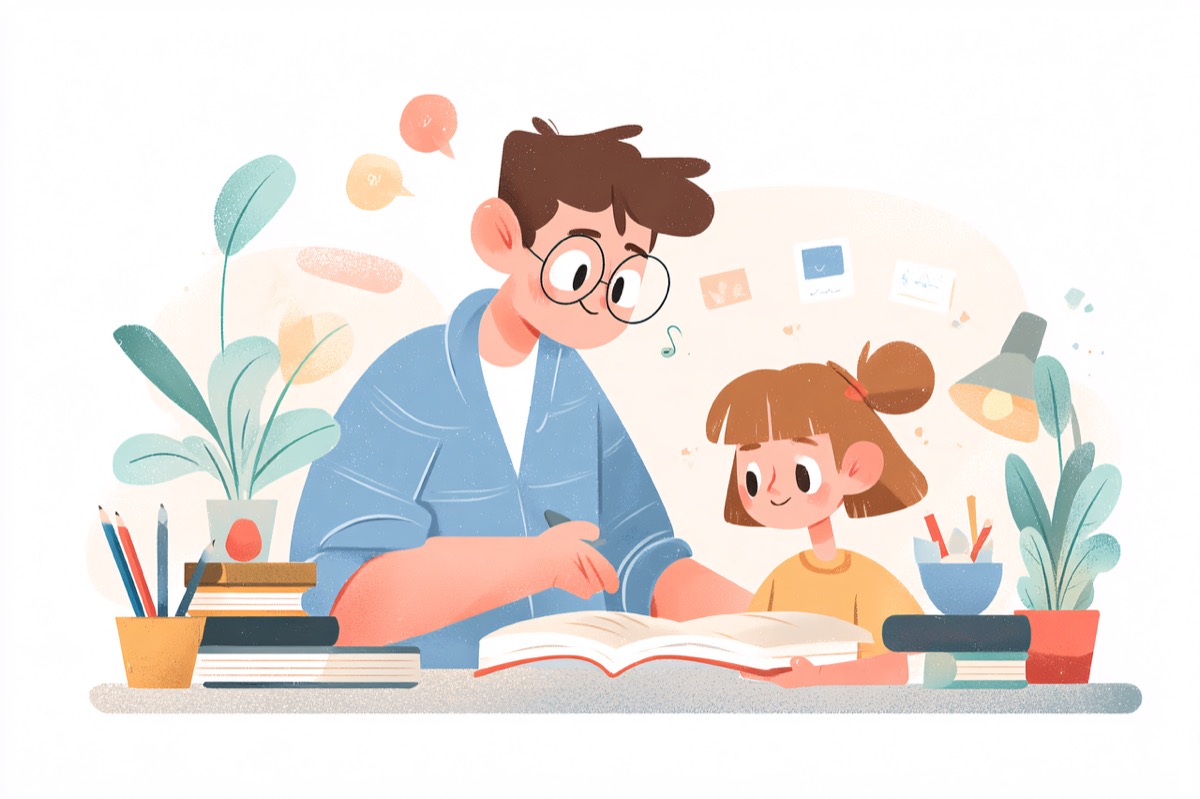
A 1-on-1 tutor can stop, identify exactly where the gap is, fill it in, and then move forward. No one else needs to wait.
Confusion is visible in real time
In a classroom or recorded video, there's no one watching your face when you lose the thread. In a 1-on-1 session, a tutor can see the moment understanding shifts to confusion — and respond immediately. That feedback loop doesn't exist in any other format.
Most students don't know how to say "I'm lost" in a classroom setting. They don't want to look slow, they don't want to hold up the class, and sometimes they don't even know they're lost until they try a problem on their own. Tutoring creates a space where confusion is not only okay — it's the whole point.
Practice is immediate and specific
Reading a chapter or watching a video is passive. Understanding happens when you try to apply something and get feedback on whether you did it right. In a tutoring session, you're working problems, explaining your thinking, and getting real-time correction. That's a fundamentally different experience than any form of self-study.
The relationship matters
Students learn better from people they trust and feel comfortable with. When you're not afraid to ask a "dumb question," you ask more questions — and you learn faster. Building that relationship is impossible in a large class and doesn't happen in a course.
It's not just for struggling students
Some of our most engaged students are doing fine in school but want to go further, faster — learning Python before it's offered in their curriculum, tackling calculus concepts before their class gets there, or building skills for a career change. 1-on-1 instruction is the most efficient way to learn, full stop, not just a rescue tool.
If you've been on the fence about whether tutoring is worth it, the best way to find out is a low-stakes conversation. Book a free 15-minute intro session — no commitment, no pressure. We'll figure out what's going on and whether we can help.